
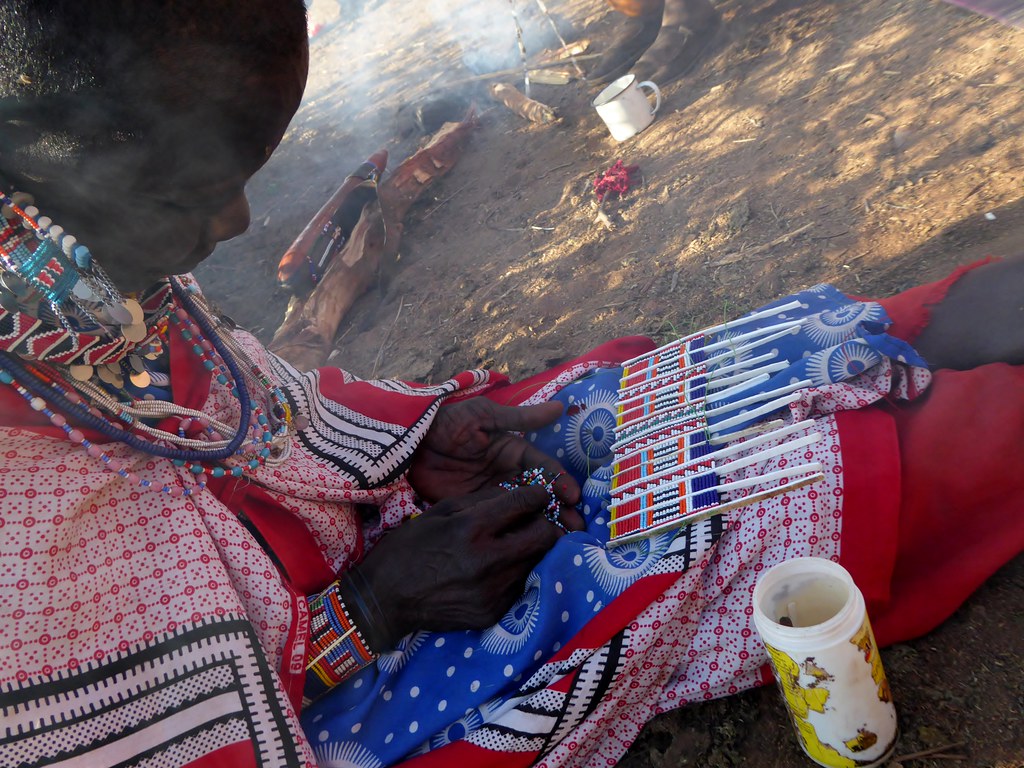

Traditional craft training turns a skill many Kenyan women already have — beading, weaving, dyeing — into a steady income, by pairing it with market access, design coaching and fair, regular pay. Across Kenya in 2026, NGOs are running exactly this model with pastoralist beaders in the north, refugee artisans in Nairobi, and weaving cooperatives in Turkana, and the results are concrete: women earning weekly wages, funding school fees, and in some cases growing a craft group into a business worth millions of shillings a year.
What Is Traditional Craft Training, and Why Are NGOs Backing It?
Traditional craft training programs teach or refine skills like beadwork, weaving, leatherwork and natural dyeing that already exist in a community — then add the pieces that turn a hobby into an income stream: quality standards, product design for outside markets, business basics, and a reliable buyer. For NGOs working in poverty alleviation, refugee support and women’s economic empowerment, it’s an attractive model because it doesn’t ask women to abandon a skill passed down through their families; it monetizes it.
It also sidesteps a common criticism of livelihoods programming: that skills training alone, without a market to sell into, leaves participants with a certificate and no income. The strongest programs in Kenya right now build the market connection in from day one.
Which Kenyan Programs Are Actually Doing This?
Several established initiatives illustrate different versions of the same model:
- BeadWORKS Kenya — a program under Northern Rangelands Trust’s MashinaniWORKS enterprise arm, working with a network of more than 1,200 women from nine Indigenous pastoralist communities across northern Kenya. Groups of five to ten artisans work under a peer-elected “Star Beader,” who trains members and handles quality checks before goods go back to a central office for weekly payment.
- Nkoilale Women Beadwork Craft Centre — a roughly 80-woman group in Narok County’s Mara Division, set up with support from the Kenya Community Development Foundation (KCDF) through its Pamoja4Change grant programme, with initial funding from corporate donor Hotpoint Appliances. The centre gives marginalized women, many with no prior access to financial services, a workshop and curio shop to sell beadwork to tourists as a group.
- RefuSHE’s Artisan Collective — a Nairobi-based social enterprise that trains refugee women, mostly from Somalia and elsewhere in East Africa, in resist-dye textile design. Since its first graduate in 2009, the program has worked with more than 160 refugee artisans, selling directly with no middleman so more of each sale reaches the women who made it.
- Turkana weaving cooperatives — local reporting has documented around 150 Turkana women turning traditional weaving and beadwork into registered businesses, with training in product design and market access helping push combined annual sales from under KES 1 million to roughly KES 3 million.
What Actually Makes These Programs Work?
Craft skill was never the missing piece — these women already knew how to bead and weave before any NGO arrived. What each successful program adds is the same three things:
Market access, not just training. BeadWORKS studies retail sales data with its artisans to decide which designs to make more of; RefuSHE controls its own sales channel instead of routing through middlemen who take a cut. Without this step, craft training tends to produce inventory nobody buys.
Design adaptation for buyers who aren’t local. BeadWORKS artisans learned to bead onto leather goods like laptop cases after research showed international buyers wanted them — a new product built on an old skill, not a replacement for it.
Money that reaches the household, on a predictable schedule. BeadWORKS pays weekly. RefuSHE keeps 100% of proceeds within its own model rather than splitting them with distributors. That predictability is what lets a woman commit household planning — school fees, a business loan repayment — around the income.
“This Center Has Given Me Not Only an Opportunity to Earn an Income, But Also to Restore My Dignity”
Noormosironi Lemurt, 40, a mother of seven at the Nkoilale centre, put it this way in an account published by KCDF: before the centre opened she relied entirely on her husband’s income; now she sells beadwork as part of an 80-woman group with real bargaining power over buyers. Fellow member Noolterito Kaleku, 36 and a mother of eight, described the same shift — from scrambling for any income-generating activity to a steady craft business she hopes to grow county-wide.
How Can NGOs and Donors Support or Replicate This Model?
For NGO staff and donors weighing whether to fund a craft-livelihoods program in 2026, the programs above suggest a practical checklist:
- Partner with an existing cooperative or community structure rather than starting from zero — BeadWORKS and Nkoilale both built on skills and social groups that already existed.
- Budget for market research and design coaching alongside craft training itself, not as an afterthought.
- Build a direct sales channel, or link into an established one like UNHCR’s MADE51 refugee-made-products initiative, so income doesn’t depend on middlemen.
- Pay on a fixed, short schedule (weekly if possible) rather than lump sums tied to occasional big orders.
- Reinvest a share of revenue in the wider community — BeadWORKS returns 5% of annual revenue to conservancy infrastructure like clean water and healthcare access.
Organizations looking to fund this kind of program should also track Kenya’s grant cycles closely; see our roundup of Kenya NGO grants closing this September for live application windows. And craft-based livelihoods sit alongside other proven approaches — our guide to poverty alleviation NGOs in Kenya covers cash-transfer and savings-group models worth comparing against a craft-training investment, while groups working specifically with young people may find more direct fit in youth-focused livelihoods programs like the one covered in our NYOTA Project guide.
Frequently Asked Questions
Is traditional craft training only for women?
In Kenya it’s overwhelmingly women-focused, since beadwork, weaving and dyeing in many pastoralist and refugee communities are traditionally women’s crafts and the programs are explicitly designed around women’s economic empowerment. Some cooperatives do include male leatherworkers or woodcarvers, but the flagship programs covered here are women-led.
How much can a woman actually earn through a craft training program?
It varies widely by program, order volume and skill level. Individual weekly payments are typically modest, but group-level impact can be substantial — Turkana weaving cooperatives have reported combined annual sales growing from under KES 1 million to around KES 3 million after market-access training, spread across roughly 150 participants.
Do these programs require formal education to join?
No. Most explicitly target women with limited formal education and no prior access to financial services, since the craft skill itself is usually already present in the community and the training fills in business, design and market-access gaps instead.
How is craft training different from general vocational training like tailoring?
General vocational training (tailoring, TVET courses) usually teaches a new marketable skill from scratch. Traditional craft training instead starts from a skill the community already holds and focuses investment on the parts that were missing — market linkages, product design for buyers, and payment structure — which can shorten the path from training to income.
Where can NGOs find funding for a craft-livelihoods program?
Watch community foundations like KCDF, corporate CSR partnerships (Nkoilale’s centre was seeded by a corporate donor), and UN-linked market initiatives like MADE51 for refugee-focused work. General NGO grant trackers, including our own regularly updated roundups, are also a starting point for identifying open calls.
By the NGOs.ke Editorial Team.


Leave your comment