

By the NGOs.ke Editorial Team
Global Handwashing Day 2026 falls on Thursday, 15 October, which gives Kenyan NGOs a little over two weeks from today to plan something worth doing. The case for doing it well is stronger this year than usual: only about a quarter of Kenyans have a place to wash their hands with soap and water at home, cholera resurfaced in Dadaab and Nairobi’s Lucky Summer ward in mid-2026, and the Bundibugyo Ebola outbreak in the region has exposed how thin infection prevention capacity still is. This guide covers what the day is, what the Kenyan numbers look like as of September 2026, and how to plan an activity that leaves something behind besides photos.
What is Global Handwashing Day, and what’s the theme?
Global Handwashing Day is an annual advocacy day held every 15 October, founded and coordinated by the Global Handwashing Partnership. Its purpose is simple: push handwashing with soap as one of the cheapest, most effective ways to prevent disease, and use the day to test and scale creative ways of getting people to wash at critical times.
The partnership’s current multi-year theme is “Be a Handwashing Hero!” The idea is that anyone, from a Grade 3 pupil to a county health executive, can champion clean hands in their own school, workplace or community. For NGOs, that framing is useful because it lets you build activities around local champions rather than a one-off lecture.
Why does handwashing matter so much in Kenya right now?
Start with access. According to UNICEF Kenya, only 25 per cent of Kenyans have handwashing facilities with soap and water at home. You can’t ask people to wash their hands at critical times if there’s nowhere to do it.
Then look at 2026’s disease picture. The WHO Kenya country office’s emergency situation report for 14–21 June 2026 listed cholera active in two counties: Dagahaley camp in Dadaab sub-county (Garissa) and Lucky Summer ward in Ruaraka sub-county (Nairobi). Forty cases had been recorded by then, with the index case’s symptoms starting on 13 May 2026. Children under five made up 37.5 per cent of cases. Among the response measures listed were hygiene promotion, handwashing and safe water handling.
The same report assessed Kenya’s readiness for the Bundibugyo virus disease (a form of Ebola) after WHO declared the DRC and Uganda outbreak a Public Health Emergency of International Concern on 16 May 2026. Overall readiness stood at 66 per cent, but the infection prevention and control (IPC) pillar scored just 25 per cent, the weakest of any pillar. Kenya’s Ministry of Health has since kept a heightened readiness posture and has reported no confirmed cases. Hand hygiene isn’t the whole answer to that gap, but it’s the foundation of IPC, and it’s the part community organisations can actually move.
Kenya’s hygiene numbers at a glance
| Indicator | Figure | Source |
|---|---|---|
| Kenyans with handwashing facility + soap and water at home | 25% | UNICEF Kenya |
| Access to safe drinking water | 59% | UNICEF Kenya |
| Access to basic sanitation | 29% | UNICEF Kenya |
| People drinking directly from contaminated surface water | 9.9 million | UNICEF Kenya |
| People practising open defecation (est.) | ~5 million | UNICEF Kenya |
| Cholera cases, May–June 2026 (Garissa and Nairobi) | 40 | WHO Kenya sitrep, week 25, 2026 |
| Kenya’s IPC readiness score for Bundibugyo virus disease | 25% | WHO Kenya sitrep, week 25, 2026 |
How should a Kenyan NGO plan a Global Handwashing Day activity?
The weakest Global Handwashing Day events are a banner, a song and a group photo, then nothing. The facility runs dry by November. If you’ve got two and a half weeks, spend them on the pieces that last.
- Pick one setting and go deep. A single school, clinic, market or camp block where you already have relationships will give you more than five scattered events. Schools remain the natural choice, since pupils carry habits home.
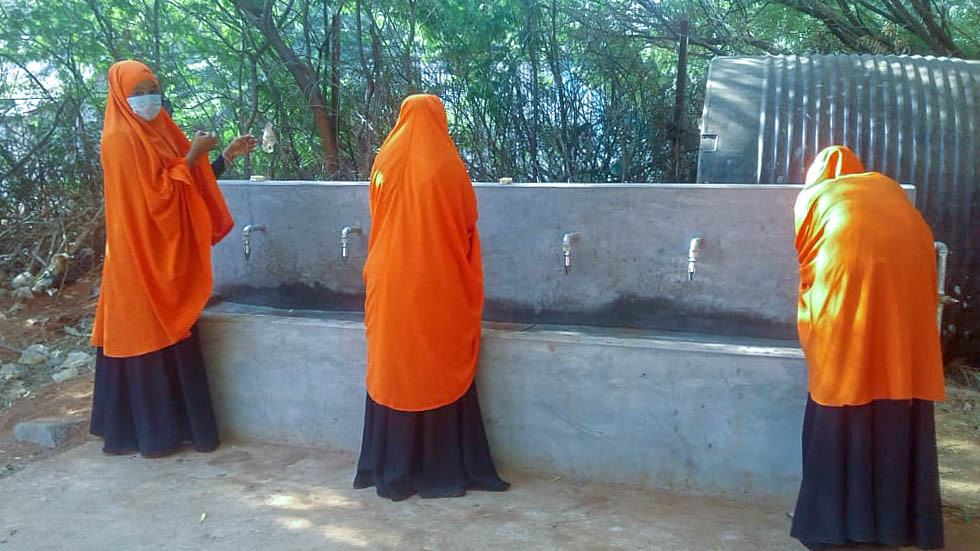
- Fix the facility before the message. If there’s no working tap, tippy-tap or station with soap nearby, a behaviour-change session is wasted. The Global Handwashing Partnership hosts a technical guide, co-developed by WaterAid and UNICEF, with designs, bills of quantities and maintenance advice for handwashing facilities in public places and institutions.
- Agree who refills the soap. Before 15 October, get a named person or committee (a school board, a clinic in-charge, a market association) to commit to soap and water supply afterwards. Write it down.
- Recruit local “handwashing heroes”. This fits the theme and works: a pupil hygiene club, a community health promoter, a respected trader. Let them lead the day.
- Link to your county health team. Sub-county public health officers are already running hygiene promotion in cholera-risk areas. Coordinating with them avoids duplication and gives your event official weight.
- Measure something simple. Count working stations with soap and water on the day, then again 30 and 90 days later. That’s the number donors will actually ask about.
- Register your event. The Global Handwashing Partnership lets organisers report events on its site, which puts your work on the global map and costs nothing.
Where should NGOs focus in 2026?
Given this year’s outbreaks, three settings stand out. The first is refugee and host communities in Garissa, where the 2026 cholera cluster started and where crowding makes transmission easy. The second is dense informal settlements in Nairobi, such as Lucky Summer, where shared water points and irregular supply undercut good intentions. The third is health facilities in border and transit counties. WHO’s risk assessment classed 13 counties as very high risk for Bundibugyo importation, including those bordering Uganda and South Sudan and international travel hubs like Nairobi.
Flood-affected areas also deserve attention. Latrines that flooded earlier this year and damaged water points raise diarrhoeal disease risk long after the water recedes, which is why WASH and shelter recovery work need to be planned together. Our coverage of how NGOs are rebuilding shelter after Kenya’s 2026 floods and how Kenyan NGOs should prepare for El Niño 2026 goes into that overlap.
Can a one-day event really change hygiene behaviour?
On its own, no. Habits change when three things line up: a convenient facility, soap that’s reliably there, and a social cue that makes washing the normal thing to do. A single day can supply the cue and the attention, and sometimes the facility. What it can’t supply is the follow-up. That’s why the strongest Kenyan programmes treat 15 October as a launch date for a school hygiene club, a soap-supply arrangement or a monitoring cycle, rather than as the whole project.
It’s also a practical fundraising moment. Donors and corporate partners, especially soap and FMCG brands, are more receptive to hygiene proposals around this date. If you’re looking for longer-term WASH money, our 2026 guide to WASH NGOs, programmes and funding in Kenya maps who’s active and where funding is coming from.
Frequently asked questions
When is Global Handwashing Day 2026?
Thursday, 15 October 2026. It’s held on the same date every year.
What is the Global Handwashing Day theme?
The Global Handwashing Partnership’s multi-year theme is “Be a Handwashing Hero!”, encouraging everyone from children to senior officials to champion clean hands in their own communities.
What percentage of Kenyans can wash their hands with soap at home?
About 25 per cent, according to UNICEF Kenya. Access is lower in rural areas and informal settlements.
Is there cholera in Kenya in 2026?
Yes. WHO’s June 2026 situation report recorded 40 cases across Garissa (Dadaab) and Nairobi (Ruaraka). Check the Ministry of Health for the latest status before planning activities in those areas.
How can a small NGO or CBO take part?
Choose one school or community site, make sure a working handwashing station with soap exists, agree who will keep it stocked, and let local champions lead the day. Then register the event with the Global Handwashing Partnership.


Leave your comment