
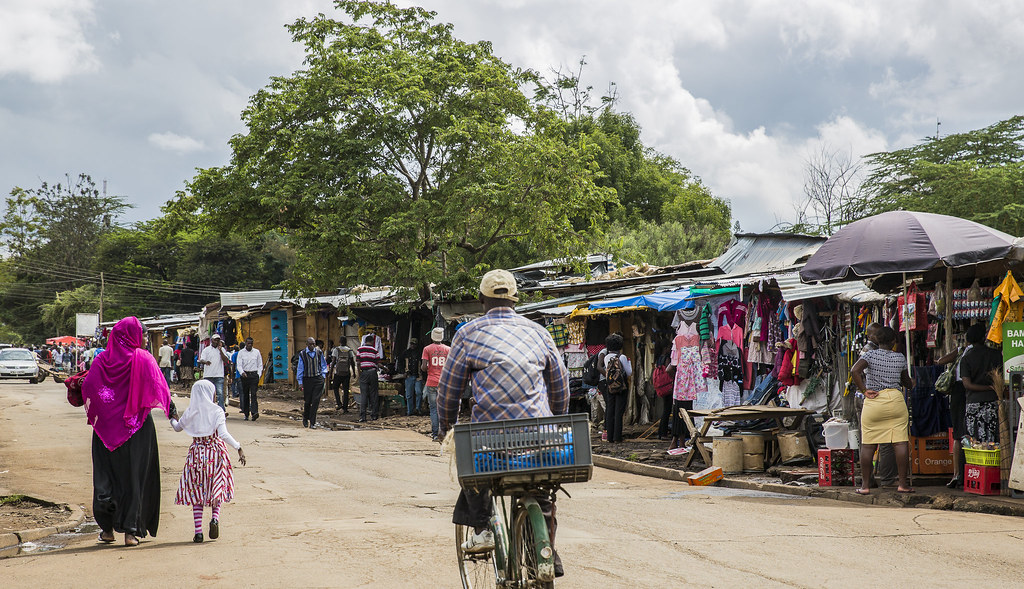

Kenya’s civil society sector is in open confrontation with the Ruto administration over a directive ordering foreign nationals out of small-scale trade. In the space of a week, more than 20 rights organisations issued warnings, the country’s official human rights watchdog accused the government of risking a xenophobic backlash, and hundreds of Burundian traders queued outside their embassy in Nairobi seeking emergency travel documents. For NGOs, donors and advocacy groups working in Kenya, the directive is now a live test of how the sector responds when a policy touches migration, livelihoods and human rights all at once.
What Did President Ruto’s Directive Actually Order?
On September 2, 2026, President William Ruto directed authorities to shut down small-scale businesses, retail shops and hawking operations run by foreign nationals, arguing that informal trade and unskilled jobs should be reserved for Kenyan citizens. The initial order gave affected traders until Monday, September 7 to close or leave the sector.
The announcement landed hardest on traders from Burundi and the Democratic Republic of Congo, many of whom have run small shops and market stalls in Kenya for years under existing residency and business arrangements. Within days, reports of intimidation, forced closures and extortion at the point of enforcement began surfacing in multiple counties.
Why Are Civil Society Groups Calling This Xenophobia?
The Kenya National Commission on Human Rights (KNCHR) said on September 8 that it had received petitions from refugee and migrant communities alleging threats, intimidation, discriminatory treatment and online attacks tied directly to the directive. The Commission warned that enforcement “should not fuel xenophobia, hate speech, extortion, profiling or vigilante action” — language rarely used this bluntly by a state body against the executive’s own policy.
A day later, a coalition of more than 20 organisations — including Amnesty International Kenya, the Kenya Human Rights Commission, The Institute for Social Accountability, Transparency International Kenya and the Pan African Lawyers Union — issued a joint statement. Their position is carefully calibrated: Kenya has the right to regulate immigration, licensing and business activity, but enforcement “must be lawful, proportionate and non-discriminatory.”
The Police Reforms Working Group Kenya went further, stating that enforcement has disproportionately targeted Burundian and Congolese traders and documenting reports of intimidation and extortion by officers on the ground. Separately, the Law Society of Kenya and the International Commission of Jurists Kenya (ICJ Kenya) both called for the directive to be reviewed, arguing it risks breaching Kenya’s obligations under the East African Community treaty.
Key Dates So Far
- September 2, 2026 — President Ruto issues the directive; foreign small-scale traders given until September 7 to close operations.
- September 7 — Original compliance deadline; civil society groups hold protests in Nairobi over reported xenophobia and discrimination against African migrants.
- September 8 — KNCHR issues its warning; State House announces a 90-day window for foreign nationals to regularise their status instead of an immediate shutdown.
- September 9 — Joint statement from 20+ rights organisations; LSK and ICJ Kenya call for a formal review of the directive.
What Changed With the 90-Day Regularisation Window?
Facing the backlash, State House walked back the hard September 7 cut-off and gave foreign nationals a 90-day window — running to roughly early December 2026 — to regularise their immigration and business licensing status. The government also directed that the Local Content Bill, 2025, currently before Parliament, be expanded to create a legal framework specifically governing foreign participation in small-scale trade, alongside its existing requirement that foreign companies source at least 60% of goods and services locally.
Civil society has treated the extension as a partial win, not a resolution. Amnesty Kenya described it publicly as “a reprieve, not a remedy,” noting that the 90-day window does nothing to restore the rights of traders whose shops were already shut down or who were harassed before the policy shifted.
What Should Kenyan NGOs and Civil Society Actually Do Now?
For organisations working in human rights, refugee protection, or community development, this moment carries three practical implications rather than just a news story to watch:
- Document, don’t just react. KNCHR is actively collecting petitions from affected migrant and refugee communities — NGOs with direct community access are well placed to refer cases and corroborate patterns of enforcement abuse.
- Track the Local Content Bill. Once the small-scale trade framework is drafted into law, it will likely become the long-term compliance regime foreign-owned micro-enterprises operate under — a governance issue as much as a rights one.
- Coordinate rather than duplicate. With over 20 organisations already signed onto a joint position, smaller NGOs and community-based organisations gain more from aligning with that coalition’s messaging than issuing separate statements.
The episode also sits close to Kenya’s broader NGO regulatory environment. Organisations still working through their own compliance obligations under the PBO Act 2026 should note that advocacy on a politically sensitive directive like this one is squarely within the lawful mandate of a registered public benefit organisation — but it is worth reviewing that mandate before issuing public statements, given how charged the current environment is.
Frequently Asked Questions
Is it now illegal for foreign nationals to run small businesses in Kenya?
Not outright. The original hard deadline was replaced with a 90-day window (from around September 8, 2026) for foreign traders to regularise their immigration and licensing status rather than face immediate closure.
Which nationalities have been most affected?
Reporting and civil society statements point to traders from Burundi and the Democratic Republic of Congo as the groups most affected by enforcement so far, though the directive applies to foreign nationals generally.
What is the Local Content Bill, 2025, and how does it relate to this?
It is a bill before Parliament, sponsored by Laikipia County Woman Representative Jane Kagiri, originally aimed at requiring foreign companies to source goods and services locally. President Ruto has directed that it be expanded to also govern foreign participation in small-scale trade.
Which organisations have spoken out on this directive?
KNCHR, Amnesty International Kenya, the Kenya Human Rights Commission, The Institute for Social Accountability, Transparency International Kenya, the Pan African Lawyers Union, the Police Reforms Working Group Kenya, the Law Society of Kenya and ICJ Kenya have all issued public statements or warnings.
Does this affect registered NGOs and their foreign staff?
No — the directive targets small-scale commercial trade and hawking, not registered NGOs, their staff work permits, or their PBO Act registration status, which remain governed by separate legal frameworks.
For background on Kenya’s obligations toward non-citizens more broadly, see the Kenya National Commission on Human Rights, the state body leading the monitoring response to this directive.
Related reading on ngos.ke: Refugee Rights: Challenges and Opportunities and Advocating for Marginalized Communities.
By the NGOs.ke Editorial Team.


Leave your comment