

By the NGOs.ke Editorial Team
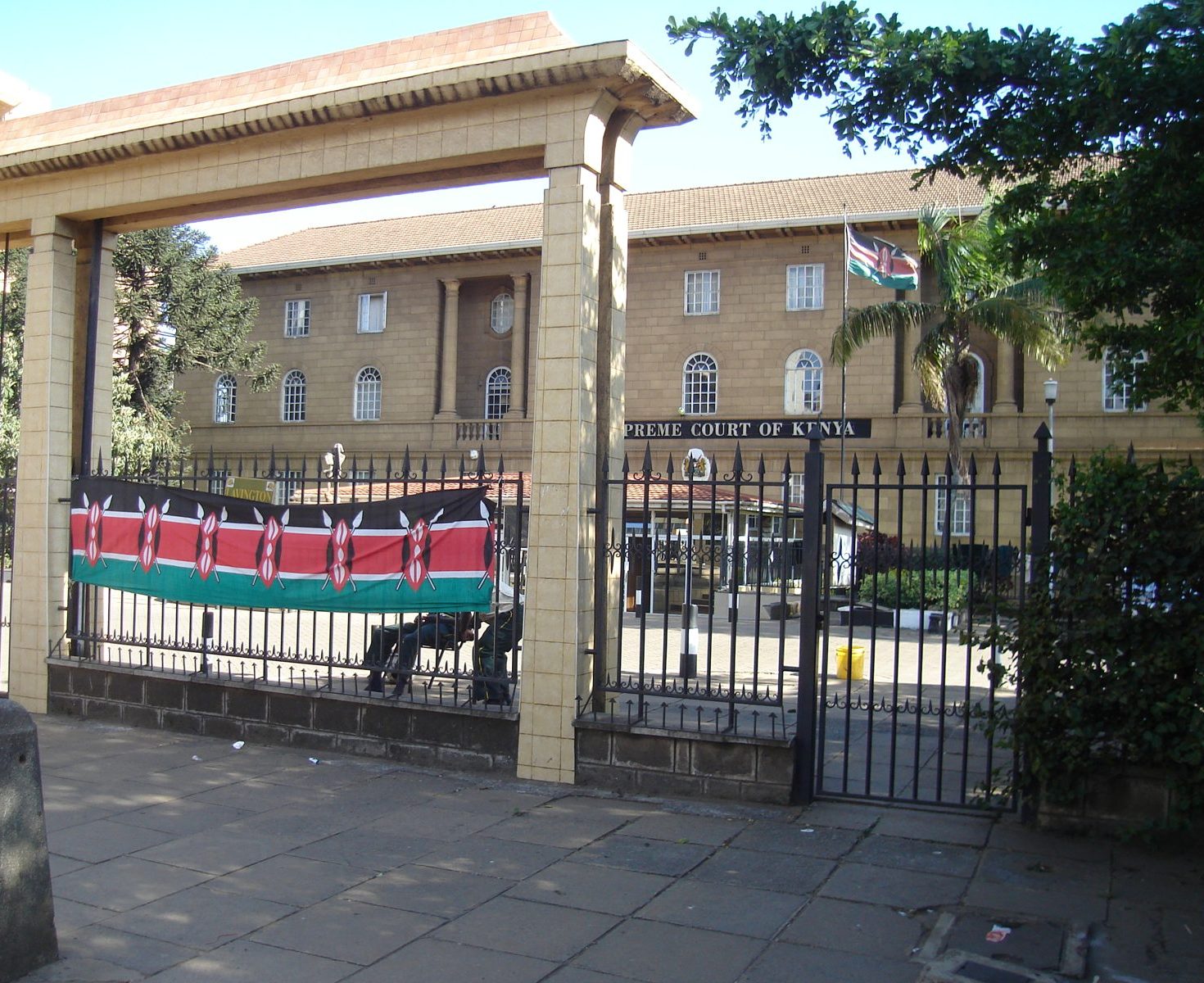
Three Kenyan rights organisations have gone to the High Court asking judges to force the state to investigate, prevent and prosecute organised political violence before the 2027 general election. The petition, filed at the Milimani Law Courts in Nairobi on 28 October 2026 by the Kenya Human Rights Commission (KHRC), Katiba Institute and the Independent Medico-Legal Unit (IMLU), together with three individual petitioners, asks for a multi-agency task force within 30 days, preservation of evidence, police protection for lawful gatherings and regular reports to the court. As of mid-November 2026, no hearing date had been reported publicly.
For NGOs that run civic forums, voter education, press briefings or community meetings, this case matters well beyond the courtroom. It sets out, in one filing, how civil society sees the security risk heading into an election year, and it hands organisations a practical template for documenting attacks.
Who filed the political violence petition, and against whom?
The Star, Citizen Digital, The Standard and Dawan Africa all name KHRC, Katiba Institute and IMLU as the institutional petitioners. The Star lists the three individual litigants as Kwamchetsi Makokha, Mary Kambo and Elphas Osoro. Citizen Digital describes six petitioners in total.
Reports differ slightly on the respondents. Dawan Africa lists Inspector-General of Police Douglas Kanja, National Intelligence Service Director-General Noordin Haji and the Attorney General. Dawan also notes that Interior Cabinet Secretary Kipchumba Murkomen oversees these offices, and several headlines name him among those sued. According to The Star, the Independent Electoral and Boundaries Commission (IEBC) and the Kenya National Commission on Human Rights (KNCHR) are listed as interested parties.
What orders is the petition asking for?
Pulled together from The Star and Citizen Digital (the 90-day and quarterly-report prayers appear in Citizen Digital’s account), which reported the prayers in the most detail, the key orders sought are:
| Order sought | Timeline in petition |
|---|---|
| Multi-agency task force (National Police Service and DCI, working with the ODPP) to investigate politically motivated attacks, including who recruits and finances the groups | Set up within 30 days |
| Preservation of CCTV footage, police Occurrence Book entries and communication records | Immediate |
| Joint report to the court on progress, findings and files forwarded for prosecution | Within 60 days |
| Report on the nationwide crackdown the government announced in December 2025 | Within 90 days |
| Adequate police security for rallies, religious services, press conferences and civic forums | Ongoing |
| Quarterly reports from state agencies; periodic reports from IEBC and KNCHR | For six months |
| A national framework to prevent organised political violence, with intelligence-sharing and victim protection | Not specified |
| Declarations that the violence and the state’s response violate constitutional rights, plus damages for the KHRC office and All Saints Cathedral attacks | At judgment |
The petition leans on Article 38 of the Constitution on political rights (as reported by The Star) and Article 91(2)(c), which Citizen Digital and The Standard describe as barring political parties from establishing or maintaining paramilitary forces, militias or similar organisations. The petitioners also ask the court to keep supervisory jurisdiction, so the case would not simply end with a judgment and be forgotten.
Their core argument, as quoted by The Star, is that “an after-the-fact election petition is structurally incapable” of fixing the harm. In other words, waiting until after August 2027 to challenge results does nothing for people already attacked at meetings.
Which incidents does the petition cite?
The filing describes a pattern rather than a single event. The incidents reported across the coverage include:
- 6 July 2025, KHRC offices, Nairobi: a press briefing by mothers of victims of police killings and enforced disappearances, ahead of Saba Saba, was disrupted by armed and masked people. The Star reports phones and laptops were stolen. Citizen Digital notes CCTV evidence was handed to police under OB number 45/06/07/2025.
- 12 June 2026, All Saints Cathedral, Nairobi: a public forum on the national budget was attacked.
- 16 July, Ol Kalou by-election, Nyandarua County: violence during the by-election (The Star).
- 16 August, Homa Bay County: an attack on a Linda Mwananchi political convoy in which, The Star reports, vehicles were torched and several people were reported killed.
- Other attacks on gatherings in Gilgil, Othaya, Kitengela, Kisii and Kisumu, according to The Star.
These remain allegations. As Citizen Digital points out, they are subject to judicial determination, and no government response had been published in the coverage we reviewed. Accounts of the KHRC incident also vary in detail between outlets, which is one more reason for organisations to keep their own careful records.
Why does this case matter for NGOs and CBOs?
Most Kenyan NGOs aren’t party to the suit, but many are exactly the kind of target it describes. The KHRC incident was a press conference. The All Saints attack hit a budget forum. Those are routine civil-society activities, and the 2027 calendar will be full of them: voter education, candidate debates, public participation hearings, county budget meetings.
If the court grants even part of the orders, organisations could gain a clearer route to demand police cover for lawful events and to push for follow-up on attacks. If it doesn’t, the filing is still useful as a record of what happened and how it was documented. That record often matters later, in compensation claims and in reports to bodies like KNCHR. We’ve covered the wider pressure on the sector in our explainer on Kenya’s shrinking civic space.
What can NGOs do now to protect events and staff?
The petition’s own evidence trail suggests a few practical habits worth building before the campaign season peaks:
- Risk-assess every public event. Treat budget forums, rights briefings and voter education sessions as potential targets, especially in counties already named in reporting on these attacks.
- Notify police in writing and keep the copy. A dated notification shows the event was lawful and that authorities knew about it.
- Preserve evidence straight away. Back up CCTV off-site, photograph damage, and always get an Occurrence Book number when you report. KHRC’s OB number became part of the court record.
- Document injuries properly. Get medical examination and records quickly; medico-legal documentation is what IMLU specialises in.
- Report to KNCHR. The Kenya National Commission on Human Rights is an interested party in this case, and the petition asks that it file periodic reports, so independent incident records will matter.
- Plan for staff wellbeing and digital risk. Threats often move online first. Our guides to cybersecurity for NGOs in Kenya and the Haki Village protection hub for human rights defenders cover the support available.
What happens next?
None of the reports published so far gives a case number, an assigned judge or a mention date. Dawan Africa noted only that the court would decide how to handle the petition. With the election due in August 2027, the timelines in the prayers (30, 60 and 90 days, then quarterly reports) would only bite if the court moves quickly. We’ll update this page as directions are issued.
Frequently asked questions
Which court is hearing the political violence petition?
Kenyan outlets report it was filed at the High Court at Milimani Law Courts, Nairobi, on 28 October 2026. KNCHR and the IEBC are interested parties, not petitioners.
Who are the petitioners?
The Kenya Human Rights Commission, Katiba Institute and the Independent Medico-Legal Unit, joined by individual victims including Kwamchetsi Makokha, Mary Kambo and Elphas Osoro.
What is the 30-day task force the petition asks for?
A multi-agency team drawn from the National Police Service and the DCI, working with the ODPP, to investigate politically motivated attacks and who finances them, and to report publicly.
Can other NGOs join the case?
Organisations can apply to the court to join a petition as interested parties or friends of the court (amicus curiae), subject to the court’s approval. Any NGO considering this should take advice from its own lawyer.
Where should an NGO report an attack on its event?
Report to the nearest police station and get an OB number, preserve all evidence, and also report to KNCHR so the incident is captured in independent human rights records.
Sources: The Star, Citizen Digital, The Standard, Dawan Africa (all 28 October 2026).
Also worth a read: Embu Rally Violence: What Happened and Who’s Blamed — from 254.ke, part of the NGO Summit media network.


Leave your comment