
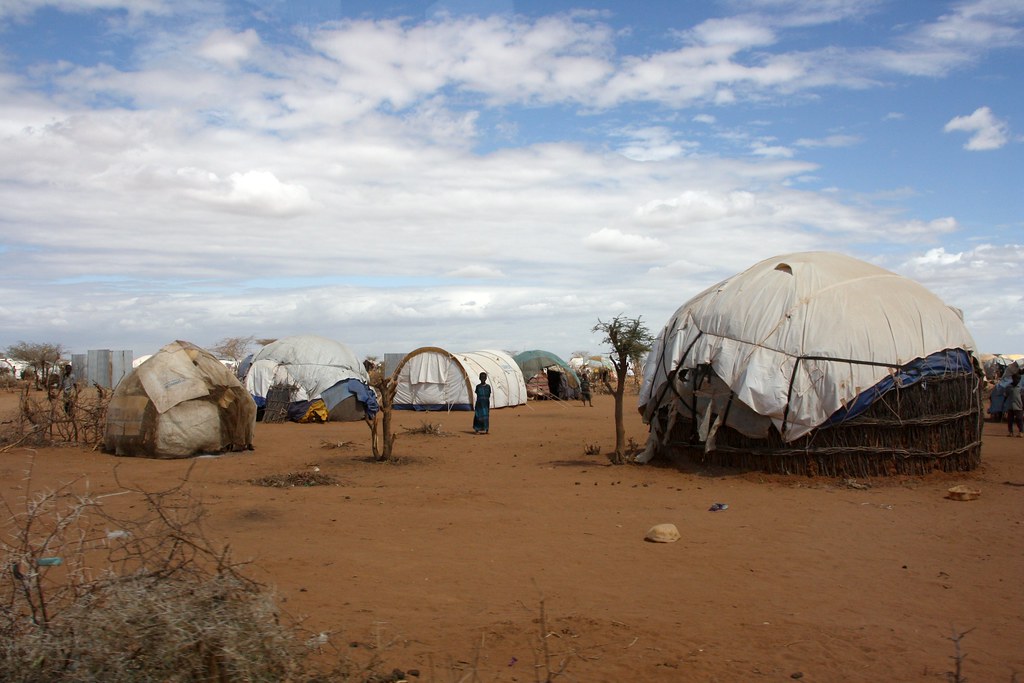

By the NGOs.ke Editorial Team.
What do refugee aid cuts mean for Kenyan NGOs in 2026? They mean more demand on fewer resources. UNHCR’s Kenya data portal, updated to 31 August 2026, counts 640,091 refugees and 231,477 asylum-seekers in the country, 871,568 people in all. Since the loss of a major donor, food assistance in the camps has been rationed by need rather than shared evenly, and local organisations are being asked to fill gaps in protection, mental health and livelihoods that no one has fully funded.
Kenya refugee numbers at a glance (August 2026)
| Location | People (refugees and asylum-seekers) | Share |
|---|---|---|
| Garissa (Dadaab area) | 429,352 | 49.3% |
| Turkana (Kakuma and Kalobeyei area) | 323,662 | 37.1% |
| Nairobi | 118,554 | 13.6% |
| Total | 871,568 |
Source: UNHCR Operational Data Portal, Kenya, data as of 31 August 2026. The portal lists these three locations only and does not break the figures down by individual camp.
What is “differentiated assistance”?
Differentiated assistance is the World Food Programme’s approach of sorting refugee households into categories and giving each a different level of support. It replaced blanket food aid in 2025, when WFP said its budget could no longer cover everyone. The Department of Refugee Services and WFP had signed a four-year memorandum of understanding on differentiated assistance in January 2025, running to 30 June 2027 with the option to renew.
Published accounts of the ration levels differ slightly, and they have been adjusted since the system began. The New Humanitarian reported in October 2025 that the two most vulnerable categories received 40% and 20% of the recommended minimum food basket in Dadaab, with a $4 cash transfer added for the partially self-reliant group and nothing for the self-reliant. A January 2026 analysis of Kakuma by the XCEPT research programme gave 55%, 35% and 20% for the first three categories, and nothing for the fourth. Both sources agree on the structure; neither gives the share of households in each category.
What has the funding gap done on the ground?
The same research found that USAID had funded over two-thirds of refugee food aid in Kenya. Its withdrawal is the context for the changes above, and it connects to the wider funding squeeze we covered in Kenya’s NGOs after USAID.
Reported effects, drawn from refugee-led surveys and interviews and not independently verified, include:
- Disputed categorisation. Refugees in Dadaab told The New Humanitarian that some households were wrongly categorised or left out, and that appeals through help desks and a hotline had persuaded few.
- Rising violence and distress. A survey by the NGO Refugee Group, carried out in August 2025, reported that gender-based violence cases more than doubled in the previous six months, with over half of respondents reporting more domestic violence.
- Service gaps. Refugees reported water shortages linked to unpaid pump fuel and medicine shortages in clinics.
- Weaker local trade. With less aid money circulating, traders in and around the camps report lower spending.
These are the accounts of affected people and researchers. The agencies named have their own figures and processes, so readers should treat the numbers as indicative.
Where do Kenyan NGOs fit in?
The Kenyan government’s Shirika Plan aims to move refugees from camp-based management to integrated settlements, and the 2025 WFP agreement explicitly supports that shift. Our Shirika Plan guide explains what it means for civil society. In a squeezed environment, the openings for local organisations tend to sit in four places:
- Protection and GBV response. Case management, safe spaces and referral pathways. Any organisation working here needs a real safeguarding policy; see our safeguarding guide for Kenyan NGOs.
- Mental health and psychosocial support. Our psychological first aid training guide covers a low-cost entry point for field staff.
- Livelihoods and self-reliance. Support for refugees and host-community households, especially those moved into the self-reliant category with no food assistance.
- Accountability and appeals. Helping households understand their category and use the appeal channels, and documenting errors for the agencies.
What should an NGO do now?
Check whether your organisation is registered to work in the camps and aligned with the Department of Refugee Services, because operating there requires coordination with government and UN partners. Map which of your activities depend on food-assistance recipients being stable. Budget for staff wellbeing, since frontline teams carry the pressure of rationing decisions they did not make. And document what you see, carefully and with consent, so that donors hear about gaps from organisations that know the ground.
Frequently asked questions
How many refugees are there in Kenya in 2026?
UNHCR’s data portal, as of 31 August 2026, lists 640,091 refugees and 231,477 asylum-seekers, a combined 871,568.
Which areas host most of them?
Garissa County area (including Dadaab) hosts about 49%, Turkana (including Kakuma) about 37%, and Nairobi about 14%.
Why were refugee food rations reduced?
WFP said its underfunded budget could no longer cover blanket assistance. Researchers note that USAID had funded over two-thirds of refugee food aid in Kenya.
Can Kenyan NGOs work in the refugee camps?
Yes, local and international NGOs are operating partners there, but they work through coordination with the Department of Refugee Services and UN agencies. Confirm requirements with them before starting.
Where can I check the latest numbers?
The UNHCR Kenya operational data portal publishes the registered population and is updated monthly.
Sources: UNHCR Operational Data Portal (Kenya, 31 August 2026); The New Humanitarian, 22 October 2025; XCEPT Programme / CSNS, 20 January 2026; Department of Refugee Services, 17 January 2025. Figures about ration levels reflect the dates of those reports and may have changed.


Leave your comment