

By the NGOs.ke Editorial Team
A community borehole project in Kenya needs four things before a single community member draws water: a hydrogeological survey by a licensed hydrogeologist, a Water Resources Authority (WRA) authorization to drill, an environmental review from NEMA where the project triggers one, and, after drilling, a WRA water use permit. Budget roughly 3 to 6 months and about KSh 87,000 to 220,000 for permits and approvals alone, before drilling. And plan for year four, not just launch day, because the evidence says that’s when many donor-funded water points stop working.
This guide, updated for September 2026, is written for NGOs, CBOs and faith groups planning a borehole for a school, clinic or village. It’s not written for homeowners. Most of what ranks for this topic comes from drilling companies pricing a private borehole in Nairobi. Community projects work differently, and the difference starts with the permit category.
Do NGOs need a WRA permit for a community borehole?
Yes. Under Section 5 of the Water Act 2016, every water resource in Kenya is vested in the national government, held in trust for the people. WRA says plainly that abstracting water without a permit is illegal, and that holding only an authorization (the construction-stage approval) doesn’t count as a permit. Section 36 of the Act requires a permit for any water use.
The penalties aren’t theoretical. WRA has warned that failing to hold or renew a permit can mean a fine of up to KSh 1 million or up to two years in jail. Its enforcement powers include disconnecting systems, demolishing illegal works at the owner’s cost, confiscating pumps and cancelling permits. For an NGO, a sealed borehole is also a reputational problem with the donor who paid for it.
What is a Category A “social water” permit?
WRA sorts water use into four categories. Category A is reserved for social water. Categories B, C and D cover economic use, where the user pays for the volume abstracted. For NGOs, this is the most important distinction in the whole process, because it shapes both the route your application takes and how much you’ll pay over the borehole’s life.
- Category A: social water, meaning basic domestic and community needs with limited impact on the resource. WRA issues “approvals” at this level.
- Category B: authorizations issued after technical evaluation.
- Category C: reviewed by Basin Area Advisory Committees, then authorized at regional offices.
- Category D: large, complex or cross-catchment use, escalated to WRA headquarters.
A caution: a borehole that starts as a village water point can drift into another category once it begins selling water through a kiosk or supplying an irrigation scheme. WRA lists “supplying water with domestic permits” as an offence. If your business model includes selling water, say so on the application.
Community borehole permit process: step by step
WRA’s own permitting guidance sets out the sequence below. Applications can be started through the WRA e-Citizen customer portal or at one of its 33 offices around the country.
- Hydrogeological survey. A registered hydrogeologist assesses aquifer depth, likely yield and water quality and picks the drilling point. The report is a mandatory attachment to your application.
- Land documents. A title deed, lease or signed consent from the landowner. For school or church land, get the consent letter signed by whoever legally holds the title, not just the head teacher or pastor.
- Application and assessment fee. The fee depends on the category. WRA enters the application into its permit database.
- Public notification and site visit. The application is published for objections, and WRA officers verify the site.
- Technical evaluation. Technical Evaluation Committees at WRA’s six regional offices review it.
- Authorization to construct. Only now can a licensed driller mobilise. WRA lists “practicing without professional licenses” as an offence, so check your contractor’s registration.
- Completion documents. Submit the completion certificate, the borehole completion record and a water quality analysis report.
- Final inspection, then permit. WRA inspects the works against the authorization and issues the water use permit, which is renewable every five years.
NEMA approval runs alongside this where the project needs an Environmental Impact Assessment or project report. Some counties also want a no-objection letter from the local water office or water service provider.
How much does a community borehole cost in Kenya in 2026?
There’s no official all-in price, and costs vary a lot between Kiambu and Turkana. The figures below come from 2026 market quotes published by Kenyan drilling firms and The Kenya Times. Treat them as a starting point for your budget, then get three quotes of your own.
| Budget line | Typical 2026 range (KSh) | Notes |
|---|---|---|
| Hydrogeological survey | 50,000 – 100,000 | 80,000 – 150,000 quoted for harder ASAL sites |
| WRA application and authorization | 20,000 – 50,000 | Varies by category; 30–60 days |
| NEMA review (if required) | 10,000 – 50,000 | 45–90 days |
| County no-objection letter | 5,000 – 15,000 | Not required everywhere |
| Total permits and approvals | ~87,000 – 220,000 | 3–6 months end to end |
| Drilling | 6,500 – 9,500 per metre | Nairobi-area quotes |
| Mobilisation | 30,000 – 70,000 | Rises sharply with distance |
| Casing | 3,000 – 5,000 per metre | |
| Water quality analysis | 15,000 – 30,000 | Required for the permit |
| Complete system (pump, tank) | 1.5 – 2 million+ | Domestic benchmark; community systems often cost more |
Don’t try to save money on the survey. One widely cited industry estimate puts the risk of a dry hole at up to 70% without a proper survey, and a dry hole costs you the drilling budget, not just the survey fee. Donors reviewing a WASH proposal will look for this line, along with a test pumping budget, since WRA expects pump-test data with the completion record.
Why do community boreholes stop working?
Most NGO borehole proposals go wrong here. Drilling is the easy part. Keeping water flowing in year three is much harder.
A 2024 study in Water Resources Research by Murray and colleagues at the Aquaya Institute looked at 1,805 randomly selected water points built by ten NGO programmes across nine countries in sub-Saharan Africa and South Asia. Kenya wasn’t in the sample, but Uganda, Rwanda and Ethiopia were. Of water points built in the previous year, 92% worked. Of older ones, averaging 3.5 years old, only 79% did. In the older group, piped tap stands had 74% lower odds of working than boreholes with hand pumps.
Kenya’s own evidence points the same way. A 30-year retrospective study of more than 300 hand pumps on the south coast found failure risk was higher, and lifespans shorter, where the water was more saline, the static water level was deeper, or the pump drew from an unconsolidated sand aquifer. Failure risk also rose with distance from spare-parts suppliers.
What this means for your project design:
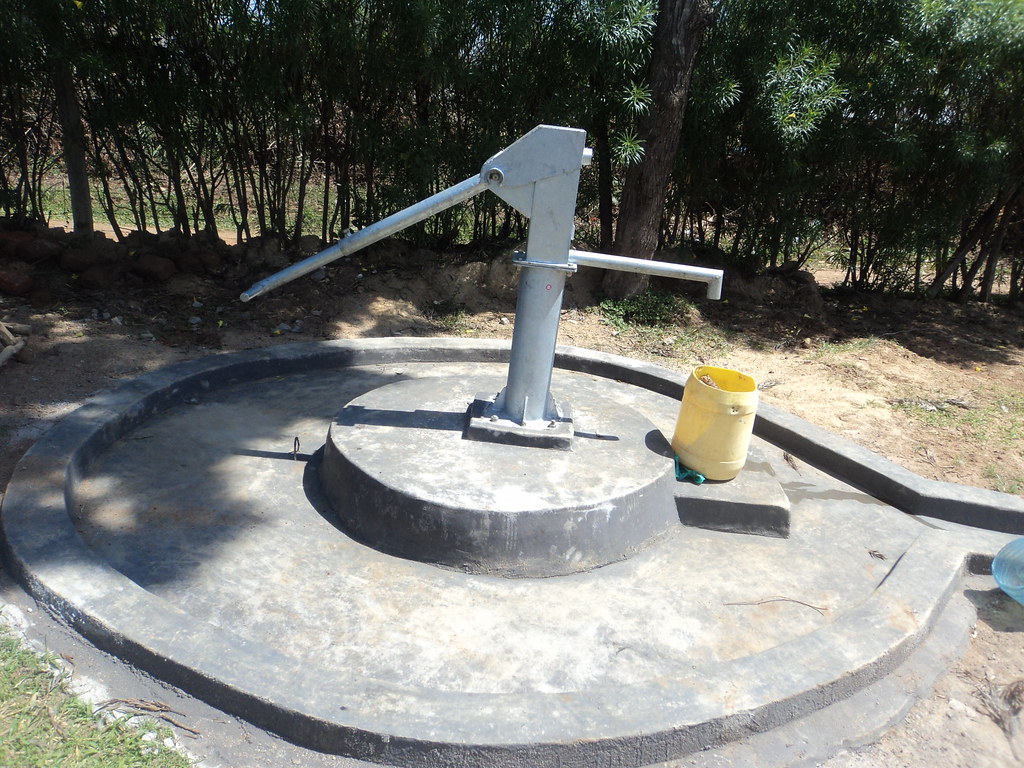
- Pick technology the community can repair. Before choosing a hand pump, solar pump or piped extension, find out where the nearest spare parts are and who can fit them.
- Budget for maintenance. Set up a water committee with a bank or M-Pesa account and a tariff agreed before commissioning, even a small one.
- Plan for permit renewal. The permit lasts five years. Put the renewal date in the handover documents so it doesn’t lapse after your programme ends.
- Join the local WRUA. WRA expects users to work with Water Resource Users Associations to settle disputes over shared water. Being known there protects the borehole later.
- Keep monitoring after handover. Functionality dropped from 92% to 79% within a few years in the Aquaya data. A light check-in schedule after handover is cheap compared with rehabilitation.
For a wider picture of who funds and delivers water projects, see our guide to WASH NGOs in Kenya and their funding in 2026. If a borehole is the centrepiece of a funding bid, our walkthrough on writing a grant proposal for a Kenyan NGO covers how to present budgets and sustainability plans. And water access only improves health outcomes when hygiene improves too, which is the focus of our Global Handwashing Day 2026 planning guide.
WRA’s official permitting steps, offences and enforcement powers are published on the Water Resources Authority permitting page.
Frequently asked questions
How long does it take to get a borehole permit in Kenya?
Plan for 3 to 6 months from survey to water use permit. The WRA authorization stage alone typically takes 30 to 60 days, and NEMA review, if needed, can add 45 to 90 days.
Is a community borehole exempt from WRA fees?
No. Social-water (Category A) use goes through a lighter route than commercial use, but it still needs a WRA application, an assessment fee and approval. Economic categories B, C and D also pay water use charges based on volume.
Can an NGO drill first and apply for the permit later?
No. WRA lists drilling without authorization as an offence, and its enforcement powers include demolishing illegal works at the owner’s cost. Always get the authorization first.
How long is a WRA water permit valid?
Five years, and it’s renewable. Build the renewal date into your handover plan so the community water committee knows when to renew.
What is the most common reason community boreholes fail?
Usually it’s weak arrangements for maintenance, repair and payment after handover, not the drilling. Research on NGO-built water points found functionality fell from 92% in the first year to 79% after an average of 3.5 years.


Leave your comment