
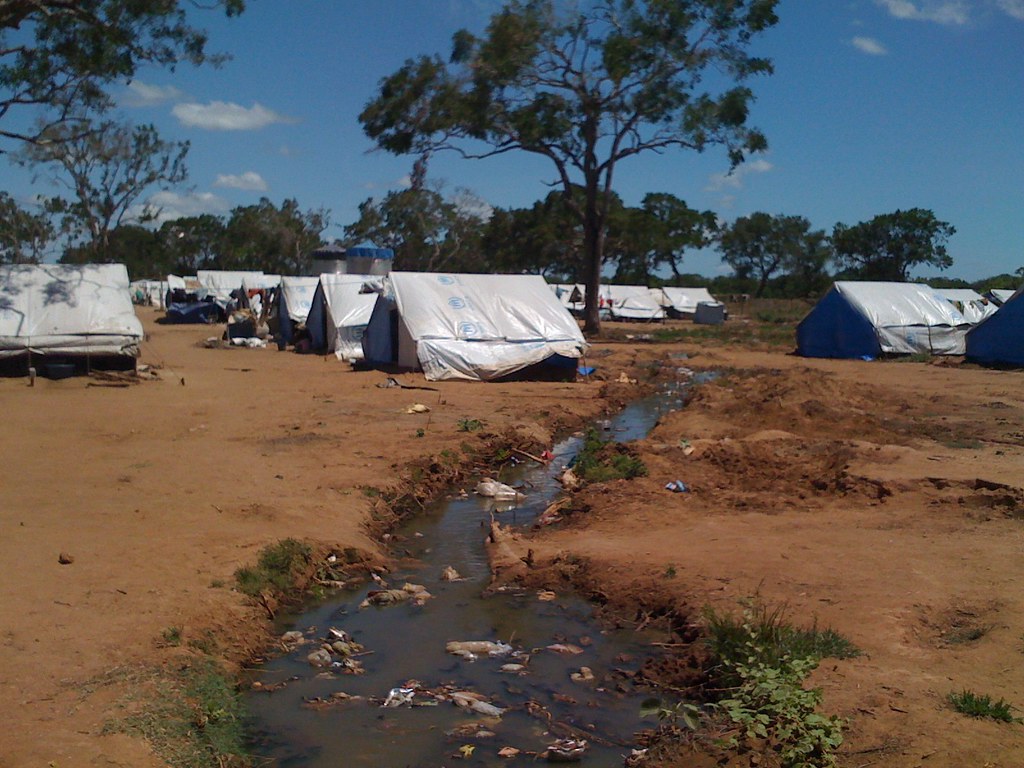

By the NGOs.ke Editorial Team
A flood evacuation camp in Kenya should give each displaced person at least 3.5 square metres of covered living space, keep shelters at least 2 metres apart, put communal toilets no more than 50 metres from where people sleep, and supply a minimum of 15 litres of water per person per day within 500 metres. Those numbers come from the Sphere humanitarian standards and UNHCR’s emergency guidance, and they’re the yardstick donors, county disaster teams and the Kenya Red Cross use when they assess a site. This guide turns them into a practical checklist for NGOs and community groups setting up or supporting evacuation sites during the November 2026 short rains.
Why are evacuation camp standards back on the agenda this November?
Because the water is rising again. On 13 November 2026, the Kenya Red Cross Society reported that more than 300 households were affected in Tana River County after a seasonal river burst its banks at Wardesa, hitting Eldera, Kono Ramadha and Mata Wardesa and cutting the Kono Ramadha–Mlanjo road. Red Cross teams were deployed to assess needs and warn communities further downstream.
It isn’t a one-off. During the March–May 2026 long rains, the Red Cross counted 85,993 households affected across 41 counties, with 18,587 households displaced. In Tana River alone, more than 3,000 families were pushed out of their homes earlier this year, and many ended up in improvised sites such as the Kijo Farm IDP camp. The Kenya Meteorological Department’s October–December outlook pointed to above-average rain in much of the country, so NGOs should expect more of these sites, not fewer, before the season ends. Our county-by-county short rains outlook covers where the risk is highest.
Evacuation camps are usually set up in a hurry, often on school grounds, church compounds or the nearest high ground. The difference between a site that protects people and one that makes them sick is mostly about planning decisions made in the first 72 hours.
What are the minimum shelter standards for a displacement camp?
Here are the key numbers NGOs should know by heart. They’re drawn from UNHCR’s emergency handbook (its shelter guidance was updated in January 2026 and its settlement-planning page in October 2026), which in turn treats the 2018 Sphere Handbook as the internationally recognised minimum. Sphere’s own site confirms the 2018 fourth edition is still the current one, with consultations on a revision starting from January 2027.
| What to check | Minimum standard |
|---|---|
| Covered living space (warm climate) | 3.5 m² per person, not counting cooking space |
| Shelter height | At least 2 m at the lowest point |
| Total site area | 45 m² per person recommended; 30 m² minimum |
| Space between shelters | At least 2 m, ideally twice the height of the structure |
| Firebreaks | 30 m wide every 300 m of built-up area |
| Site slope | Ideally 2–4% for drainage, never more than 10% |
| Groundwater | Water table at least 3 m below the surface |
| Communal toilets (emergency phase) | 1 per 50 people, no more than 50 m from shelters |
| Water quantity | At least 15 litres per person per day |
| Distance to water point | No more than 500 m from any household |
| Camp size | No larger than 20,000 people |
A quick way to use the 3.5 m² figure: a family of six needs 21 m² of covered space. A classroom of roughly 50 m² should not hold more than about 14 people if it’s being used as sleeping space. Overcrowding is the most common failure in Kenyan evacuation centres, and it drives the disease and protection problems that follow.
How should NGOs choose and lay out a flood evacuation site?
The worst outcome is moving people from one flood zone to another. Before anyone pitches a tent, check the site against a few basic questions:
- Is it above the flood line? Ask older residents where water reached in 2023–24 and earlier this year. Local memory often beats any map.
- Does water drain away? A gentle slope of 2–4% lets rain run off. Flat, clay-heavy ground turns into a swamp within days.
- Can trucks reach it after more rain? A site that’s cut off when the road floods will run out of food and water quickly.
- Is the groundwater deep enough for latrines? UNHCR recommends the bottom of any toilet pit sit at least 1.5 m above the highest groundwater level. In riverine areas like the Tana Delta, that often means raised or lined latrines, or portable units.
- Who owns the land? Get written permission from the landowner, school board or county. Disputes over tenure are a common reason families get evicted from sites a second time.
Lay out shelters in small clusters, ideally grouped by village or extended family. It keeps social networks intact, makes headcounts easier and helps communities look after their own vulnerable members. Leave the firebreaks and access paths clear, even when pressure to squeeze in more families is intense.
What WASH services does an evacuation camp need?
Water, sanitation and hygiene problems kill more people in flood camps than the floods themselves. Cholera, typhoid and diarrhoeal disease spread fast where toilets are scarce and water is contaminated.
Plan for at least 15 litres per person per day from the first week, and test it. Sphere’s water-supply guidance sets a 500 m maximum walking distance to the nearest water point. UNHCR’s planning figures add one shower per 50 people and toilet blocks within 50 m of shelters. Separate, lockable toilets for women and girls, with lighting at night, aren’t optional extras; dark, distant or shared latrines are a well-known protection risk for women and girls in crowded sites.
Handwashing stations with soap belong next to every toilet block and every food distribution point. If your organisation is new to sanitation design, our guide to safe sanitation in Kenya is a good starting point.
Who coordinates evacuation camps in Kenya?
NGOs don’t run camps alone. In practice, county governments and the national government’s disaster structures lead, with the Kenya Red Cross Society as the main operational partner on evacuation, registration and relief distribution. Kenya’s Prevention, Protection and Assistance to Internally Displaced Persons and Affected Communities Act (2012) sets out the state’s obligations to people displaced by disasters, including access to shelter, water and basic services.
For an NGO or CBO, that means three things. First, register with the county disaster coordination meeting before setting up anything, so your support fits into a single site plan. Second, share beneficiary lists and assessments, so the same households aren’t served three times while the next village gets nothing. Third, stick to what your organisation can actually sustain. Earlier this year in Tana River, the Red Cross reported working with the county government and partners to support about 2,700 households with shelter materials and WASH supplies and to build 71 latrines with the county water department. That’s the kind of joined-up response that works.
What protection risks should camp managers watch for?
Displacement camps concentrate risk. Children separated from parents, older people and people with disabilities who can’t reach distribution points, and women and girls exposed to harassment in crowded, poorly lit sites all need specific attention.
- Register every household on arrival, recording vulnerable members.
- Set up a clearly marked, staffed help desk and a confidential complaints channel.
- Make sure every staff member and volunteer has signed your safeguarding policy and knows how to refer a case.
- Keep children in some form of learning or structured play; schools used as camps should have a plan for when classes resume.
Mental health matters too. Families who’ve lost homes, livestock and crops at harvest time carry real trauma, and basic psychological first aid should be part of site management from the start.
How can smaller NGOs help without running a camp?
Most local organisations won’t manage a site, and that’s fine. Useful, low-risk contributions include supplying jerrycans, water treatment tablets, sanitary pads and solar lamps; seconding trained volunteers to the Red Cross or county teams; translating information into local languages; and tracking families once they return home, when attention and funding usually dry up. Our guide on how to help Kenya flood victims lists ways to give and volunteer responsibly.
For the full technical guidance, the UNHCR Emergency Handbook’s settlement planning standards are free to read and worth bookmarking before the next alert.
Frequently asked questions
How much space does each person need in an evacuation camp?
The minimum is 3.5 m² of covered living space per person in a warm climate, plus a recommended 45 m² of total site area per person (30 m² at the very least) once roads, services and firebreaks are included.
How many toilets does a flood camp need?
In the emergency phase, plan for at least one communal toilet per 50 people, placed no more than 50 m from shelters, with separate, lockable and lit facilities for women and girls. Aim to improve that ratio as the site stabilises.
How much water should displaced people get each day?
At least 15 litres per person per day for drinking, cooking and hygiene, from a water point no more than 500 m from any household.
Can schools be used as evacuation centres in Kenya?
Yes, schools and churches are often used because they’re on higher ground and have solid buildings, but overcrowding is a risk. Apply the 3.5 m² per person standard to classrooms and plan early for relocating families when learning resumes.
Who should an NGO contact before setting up a camp?
Contact the county disaster management office and the local Kenya Red Cross branch first, and join the county coordination meeting so your support fits into the official site plan.
Also worth a read: Kenya Short Rains 2026: When El Niño Rains Start by Region — from 254.ke, part of the NGO Summit media network.


Leave your comment